With the preseason now in the rearview mirror, we await puck drop on the 26/27 regular season on Tuesday night. There was a shift in power in the Eastern Conference last year. Could we see it spread to the Western Conference in the upcoming campaign?
Ultimately, it was a perennial contender that took home the ultimate prize last spring and the Carolina Hurricanes lifted the Stanley Cup right on cue based on their contention roadmap. They bring back an almost identical squad to the one that won it all, so who are the challengers they’ll need overcome in their bid for a repeat?
Tier 1 – Top Contenders
While there are no ‘Year 0’ teams on the contention roadmaps currently, there are a few teams who have maintained a roster strong enough to stay above the reloading benchmark while they’ve moved past the prime year from their build.
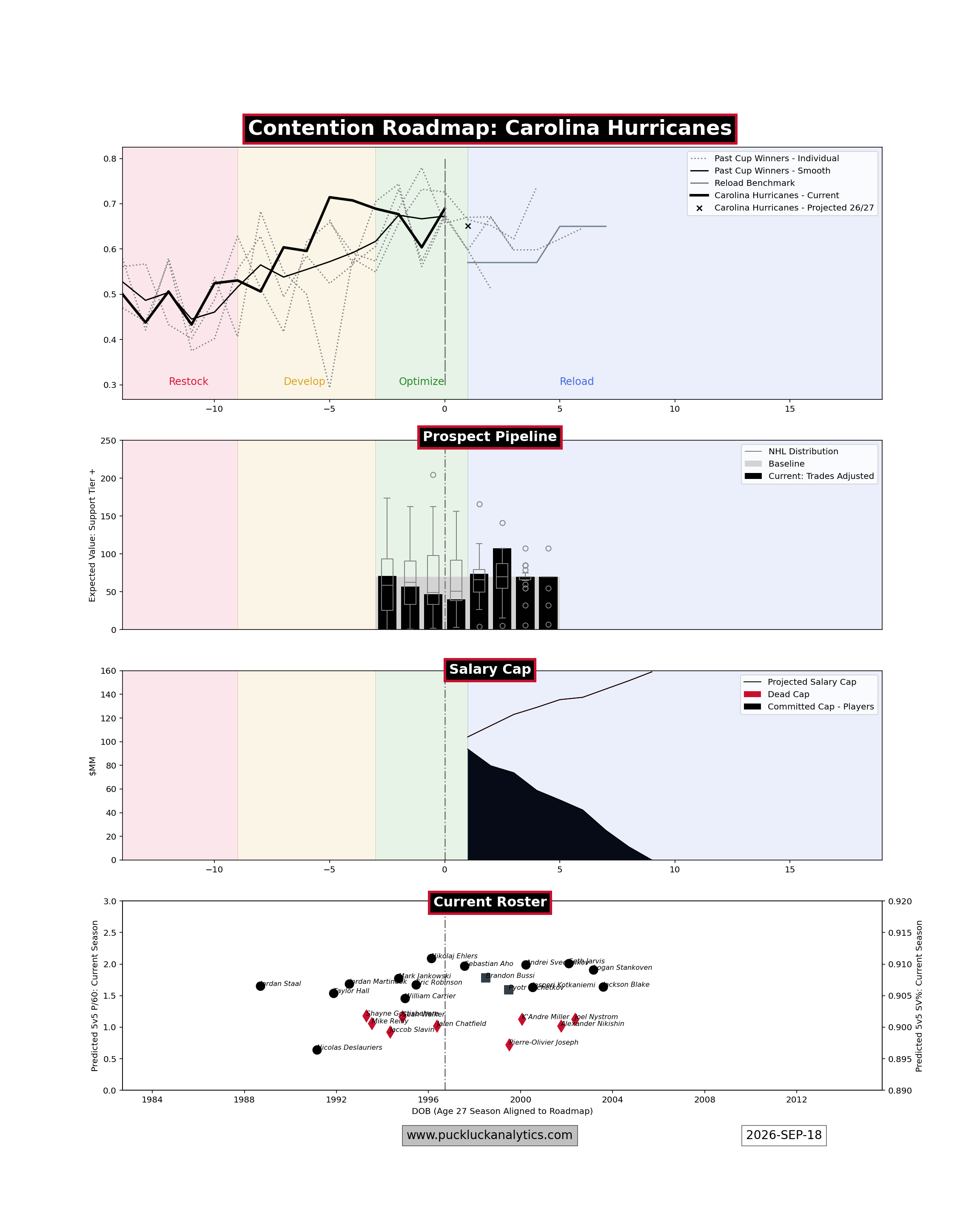
Carolina Hurricanes – No ‘Year 0’ teams is great news for the Hurricanes, who look to be the third repeat champion sine 2021. Frederik Andersen is gone, so the goaltending load falls to Petr Kochetkov and Brandon Bussi. The skater group is back in full and it’s hard to see how the Canes aren’t worthy of a legitimate bid to defend their title.
Colorado Avalanche – The Avalanche were the class of the regular season a year ago, particularly in the first half. Their defense corps returns intact and is among the best groups in the league. They continued to regenerate assets over the summer within the forward group, flipping 26 year old Jack Drury+ to Nashville for a package that included 23 year old Fedor Svechkov. They also sent Valeri Nichushkin and Ross Colton packing in deals that netted them a handful of picks that give them ammunition for in season upgrades.
Dallas Stars – The Stars are the only team in the top tier that is not a Stanley Cup winner with their current build. Now 3 seasons past ‘Year 0’, the challenge is to maintain a high level of competitiveness while regenerating some roster value out of the veteran side of the roster. It was a quiet summer in Dallas, with a trade sending Mavrik Bourque and Ilya Lyubushkin to Nashville the big change. Father time is coming after this edition of the Stars and they’ll need continued growth from young players like Wyatt Johnston and Thomas Harley as they look to contend and pass the torch on to their younger group.
Tampa Bay Lightning – While the Canadiens and Sabres upset the balance in the Atlantic Division last year, it was the Lightning that prevailed amongst the incumbents as they finished second in the division. We’re 5 years removed from their back-to-back Cups, yet the Bolts roster has been regenerated well enough that their team age profile is still reasonably balanced between veterans and younger skaters. The top end talent is starting to tip to the older side, but they look like they have potential to give it another serious run.
Tier 2A – Last Gas?
The next tier is another group of veteran teams that may very well have the horses to win it all. They also have a few more question marks hanging over them than the teams from Tier 1 and how those points play out will be critical for their Stanley Cup apsirations. A few cards falling the right way could put these teams in the mix. A few the wrong way might signal the end of their current windows.
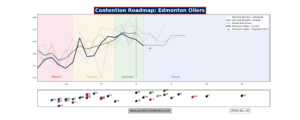
Edmonton Oilers – After back-to-back trips to the Stanley Cup final, the Oilers bowed out in round 1 to an upstart Ducks team last season. Now 2 seasons past ‘Year 0’, they’re trending in the wrong direction. Once again, they went looking for a solution in net. Once again, they went looking for a solution behind the bench. They managed to move out Darnell Nurse’s full contract. Are 36 year old Frederik Andersen and embattled head coach Mike Babcock the missing links? And where the offense is going to come from after Connor McDavid and Leon Draisaitl?
Florida Panthers – The Panthers took a bigger dive than the Oilers after defeating Edmonton twice to win back-to-back Cups. An season long Aleksander Barkov injury hovered over a campaign that saw them miss the playoffs entirely last year. A rebound season is critical to their long term outlook. Will a healthy roster and the addition of another Tkachuk be enough to achieve it?
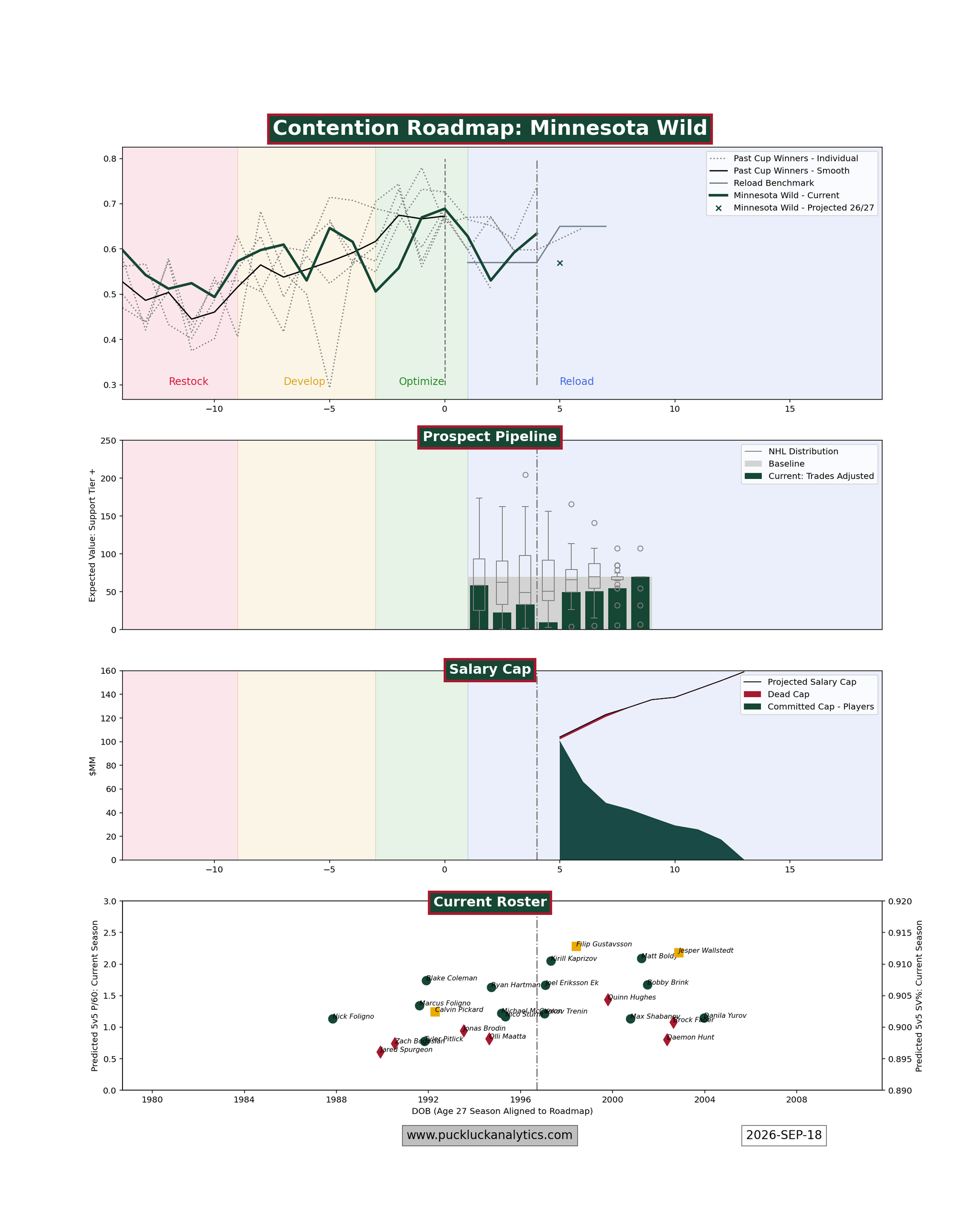
Minnesota Wild – The Wild’s acquisition of Quinn Hughes last season gave them an immediate boost. It came at a longer term cost though, with some notable young talent and picks leaving the organization. It fits with a larger trend for the Wild as their roster has shifted towards veteran heavy over the past year. With Hughes’ future in the spotlight, the time is now for this roster. Can this group make a run before it’s too late?
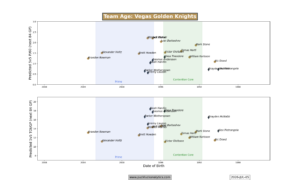
Vegas Golden Knights – Last season’s runner up, the Vegas Golden Knights are getting older, despite some aggressive maneuvering to remain competitive. Can the vets stay healthy? Is there enough organizational depth to help the stars?
Washington Capitals – It was a busy summer in Washington. Alex Tuch, Boone Jenner, and Jordan Kyrou headline the new additions to a Caps team that looks to ready to carry on in the post Ovechkin era. Ovechkin, of course, is back for another tour but he’s the only remnant of the team that won it all in 2017. The Caps have reformed their roster over the past few years and the group as a whole is in it’s prime. Did they add enough to push themselves into the contention conversation?
Tier 2B – Disruptors
The final tier is a group of young teams that look ready to make some noise this season. These teams are still a few years away from their best opportunities. With a lack of true ‘Year 0’ teams on the timeline though, the door seems to be open for a surprise upstart. If the cards fall just right, perhaps these teams can pull out an ‘early’ championship.
Anaheim Ducks – The Ducks dispatch the Oilers in round one last season, announcing their arrival in the Pacific Division after a deep rebuild. They have the young guns to continue to climb. Their challenge may be the cap as they get closer to their optimal window, after the Leo Carlsson offer sheet saga and a subsequent big deal with Cutter Gauthier. Still early in the Develop phase of the timeline, they have time to massage the roster for their prime but the door is open with the Pacific Division looking weak again.
Buffalo Sabres – The Sabres flipped the script on a decade and a half of misery by not only making the playoffs after a 14 year drought but winning the Atlantic Division and getting a series win in round 1. They sit squarely in the Develop phase of the timeline and bring a young roster into the 26/27 season. Continued internal growth should see them be a factor again this season and in years to come.
Montreal Canadiens – The Habs joined the Sabres in disrupting the Atlantic Division last season, meeting them in the second round of the playoffs. With more extensions on the books this summer for what look like high ceiling young players at team friendly prices, the Canadiens look poised to be an elite team in a few years. Can they build on their success last season and make more postseason noise this spring?
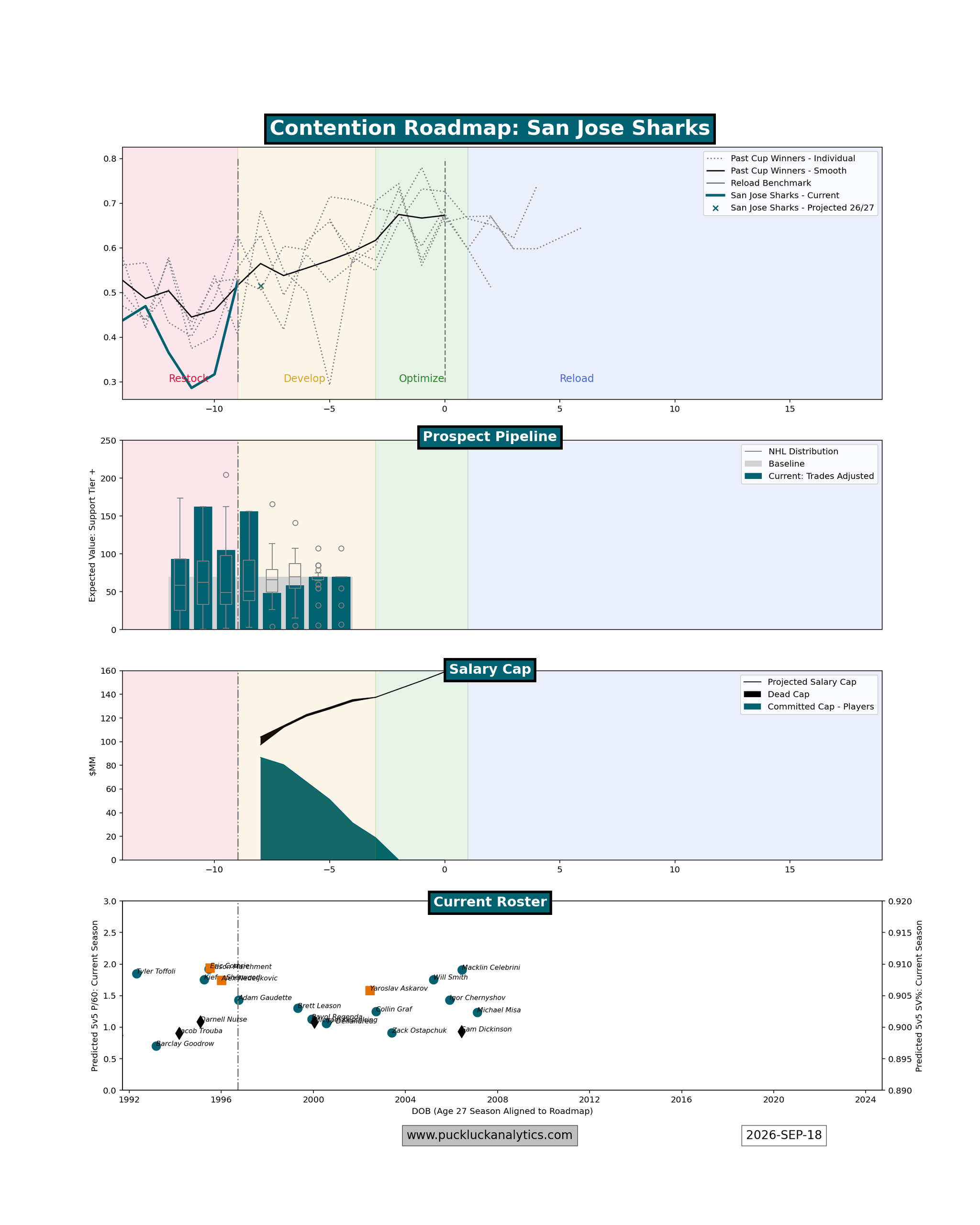
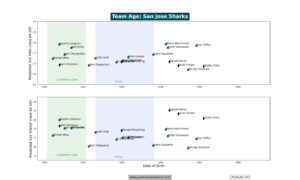
San Jose Sharks – Last season was a coming out party for Macklin Celebrini and he’s now the youngest captain in Sharks history. With 2 more top 10 picks in the fold from the 2026 draft, the Sharks cupboard is about to burst. There’s a long road ahead to ‘Year 0’ but this roster looks stacked for the future. With a plethora of young stars in the fold, the Sharks look like a team that has a legitimate shot to win early. This season might be too early even for that, but a meteoric rise up the standings is not out of the question.
Utah Mammoth – The move to Utah has been a good one for the a team that became the laughingstock of the league by the end of it’s time in Arizona. The Mammoth have taken the asset pool the Coyotes accumulated and built the foundation for a contending roster. They’re building steadily and look ready to push into the playoff conversation.
More
For contention timelines for all 32 teams, visit the League Overview page.