As I’ve looked into the contention arc for NHL teams, it’s become clear that the requisite time to build from a full tear down to true contender status is roughly a decade. Teams that have successfully completed the journey generally have roots in the draft and have also supplemented or optimized their core group through the trade market.
To dig further into how teams can consolidate value into a core group with championship potential, I went looking for the draft origins of skaters who fit in the Elite, Support and Contributor Tiers that I have previously defined. Rather than looking at the potential success probability of draft picks, we’re going to flip that around and look at where in the draft quality NHLers originated from. If we were in the shoes of a rebuilding team, where should we focus our effort when looking to assemble a new contention cohort?
For this analysis, I’ve chosen to go back to the 2019/2020 season, which aligns with the historical seasons I’ve used on the Contention Roadmaps. It give us seven seasons of data to work with, with draft roots that remain in the analytics era and the salary cap era.
Forwards
To start with, let’s remind ourselves what the forward tiers represent:
Elite – 75th percentile 5v5 TOI/GP and 90th percentile 5v5 P/60. There’s an average of 30 forwards per season in this group, so this our franchise forward group.
Support – 50th percentile 5v5 TOI/GP and 75th percentile 5v5 P/60. There’s an average of 93 forwards per season in this group, so this is our top line forward group.
Contributor – 25th percentile 5v5 TOI/GP and 50th percentile 5v5 P/60. There’s an average of 207 forwards per season in this group, so this is our top 6 forward group.
The first question we need to address is how many of the skaters were drafted in the first place?
| Tier | Drafted | Undrafted | Drafted % |
| Elite | 195 | 17 | 92% |
| Elite + Support | 605 | 47 | 93% |
| Elite + Support + Contributor | 1240 | 209 | 86% |
The results here are unsurprising. The vast majority of top six quality forward seasons come from players that were drafted. Getting such a season from an undrafted player is certainly possible, but it’s more a method to add a single piece rather than build an entire cohort. It’s also harder to find a top line quality season this way than a top six quality one, so looking here for foundational building blocks is not a recipe for success.
Now to the draft. Let’s start with the full complement of players in the group including the Elite, Support, and Contributor tiers.
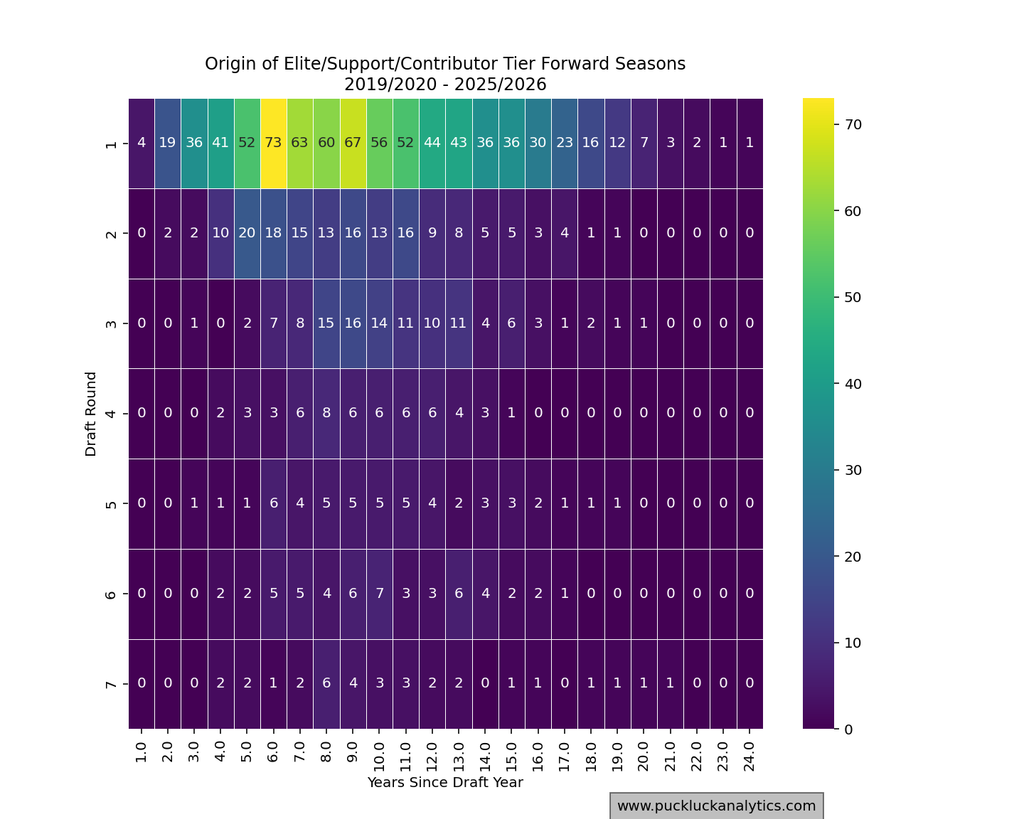
Again, the results here are unsurprising. We know that first round picks are the best chance to draft NHL quality players. We also know that the 2nd and 3rd round picks result in a few hits while rounds 4-7 are effectively lottery picks.
What is interesting is the timing of the Contributor+ quality seasons. There’s a noticeable peak that occurs from about 5-11 years post draft. These are 22-28 year old players providing top six forward quality seasons.
We can do the same exercise with the Elite tier and the Elite+ Support tiers:
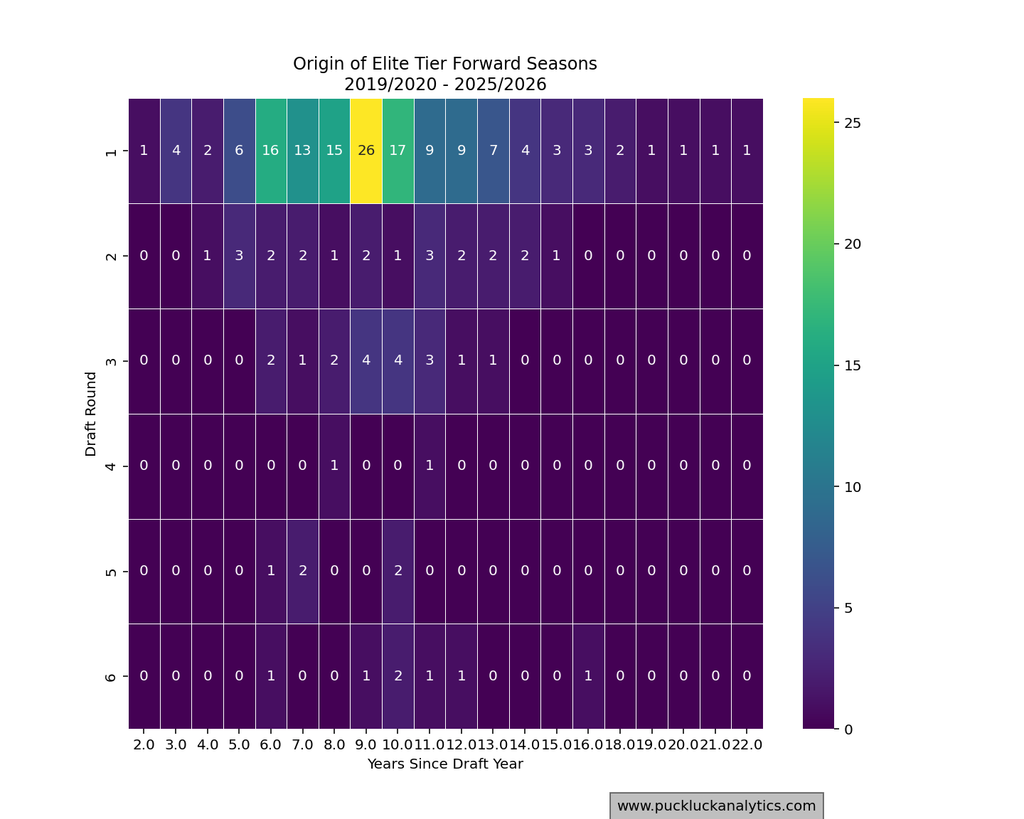
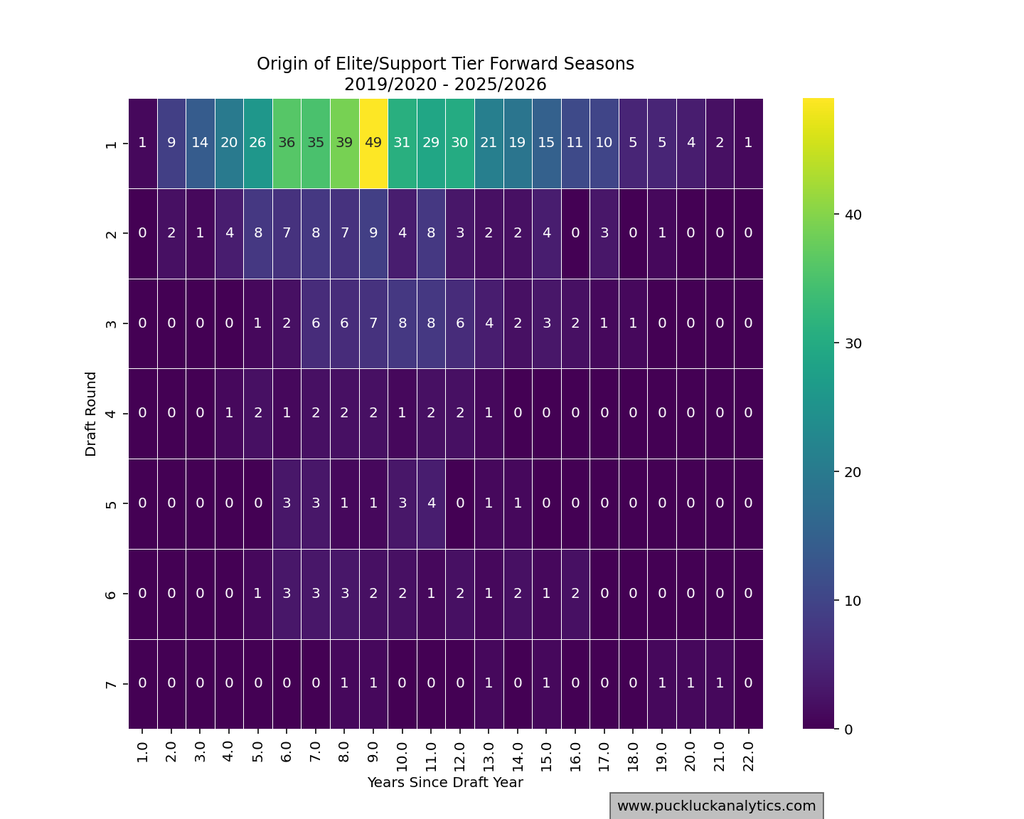
Here we see the same general trend, although there is a more noticeable singular peak at 9 years after draft on both these plots. So, while we might reasonable expect top six quality seasons from forwards starting about 5 years after their draft, top line and franchise quality seasons appear to take a few years longer to develop.
We already knew that the first round provides the greatest discrepancy in potential between the first and last pick in the round. Since that’s where the vast majority of even contributor tier seasons originate, it’s worth looking at the first round in more depth.
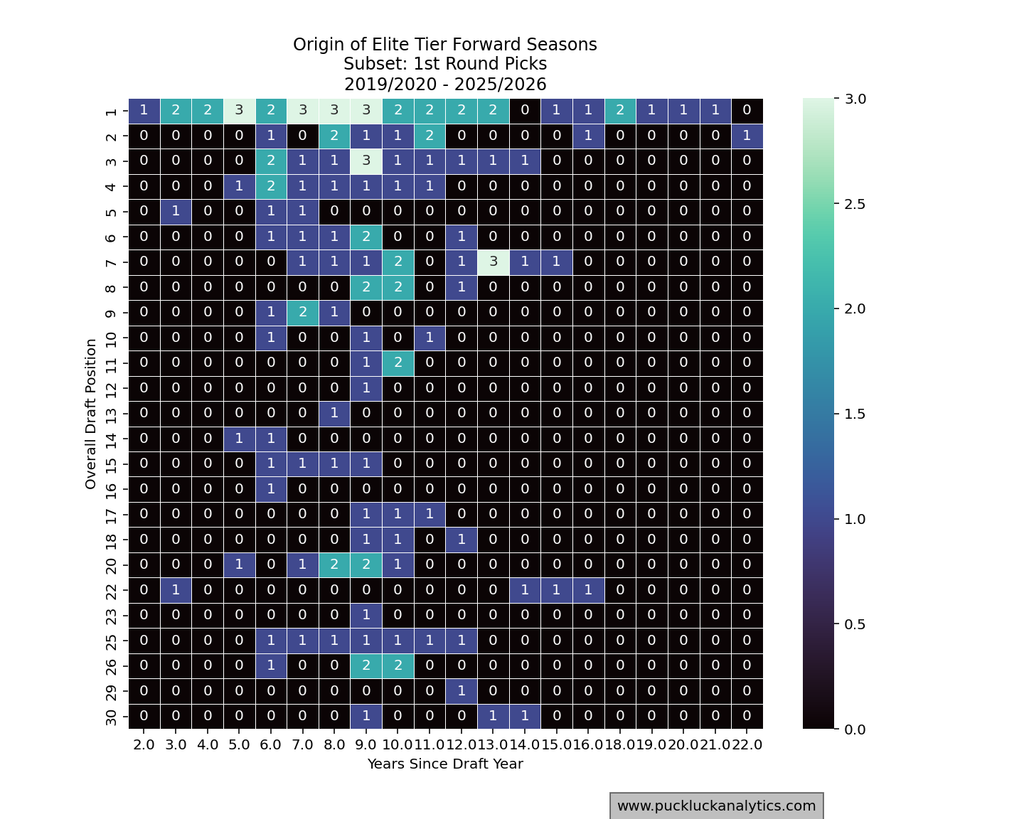
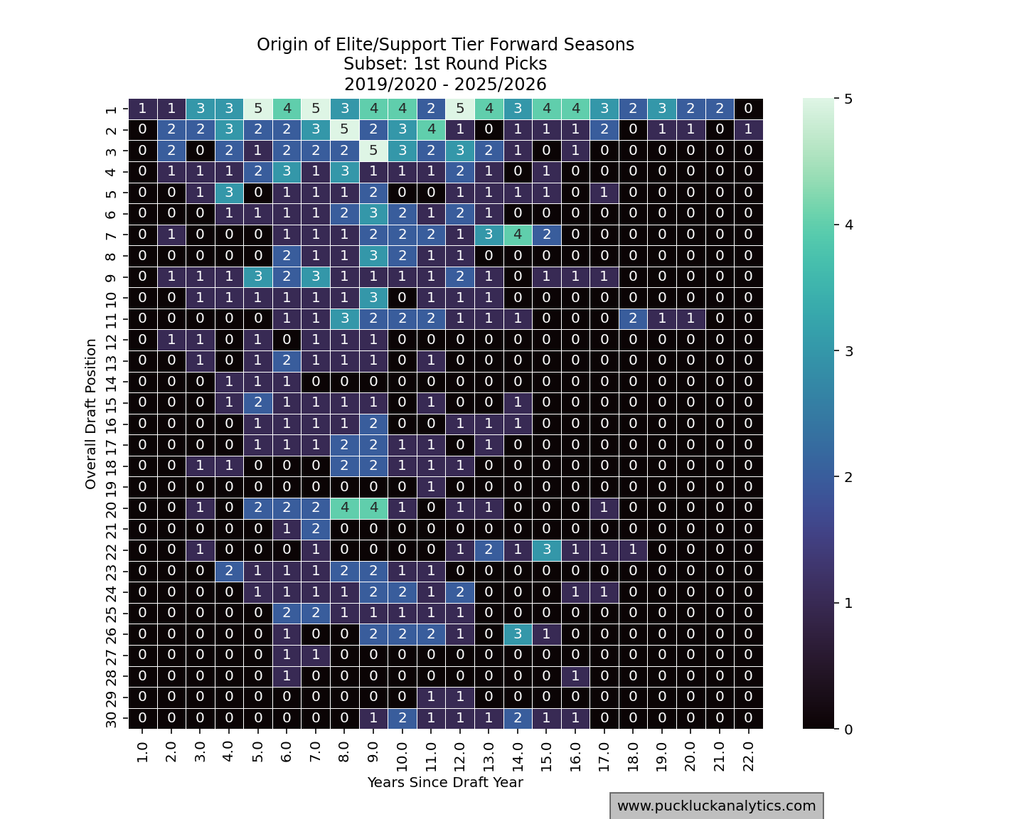
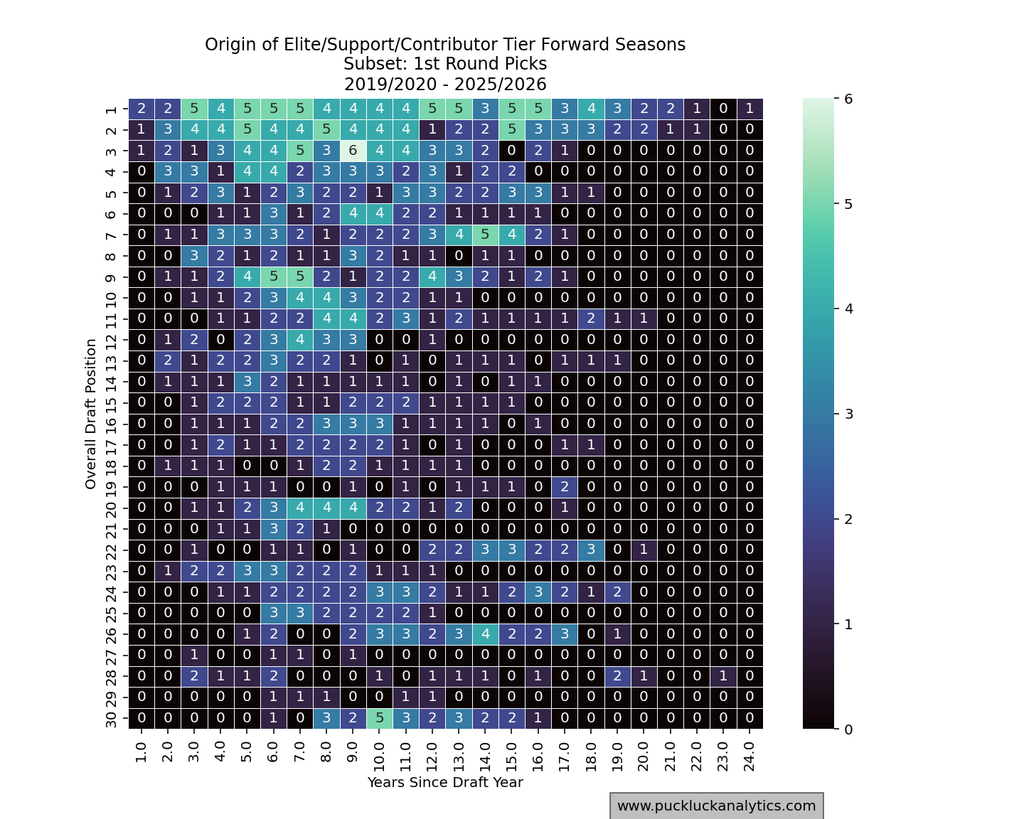
Here, we see the distinct advantage that the 1st overall pick provides. It clearly provides the best opportunity to find an eventual elite forward or top line forward. The top 3 also look like a definitive group with Support and Contributor tier seasons coming from the top 3 at higher frequency that 4th pick or later. And if we look at the Contributor tier, the top 10 looks like another reference point where success frequencies drop noticeably.
Defensemen
We can do the same exercise with defensemen with similar results:
Elite – 75th percentile 5v5 TOI/GP and 90th percentile 5v5 P/60. There’s an average of 17 defensemen per season in this group, so this our franchise defensemen group.
Support – 50th percentile 5v5 TOI/GP and 50th percentile 5v5 P/60. There’s an average of 79 defensemen per season in this group, so this is our top pair defensemen group.
Contributor – 25th percentile 5v5 TOI/GP and 25th percentile 5v5 P/60. There’s an average of 177 defensemen per season in this group, so this is our top 5 defensemen group.
| Tier | Drafted | Undrafted | Drafted % |
| Elite | 113 | 8 | 93% |
| Elite + Support | 498 | 57 | 90% |
| Elite + Support + Contributor | 1062 | 183 | 85% |
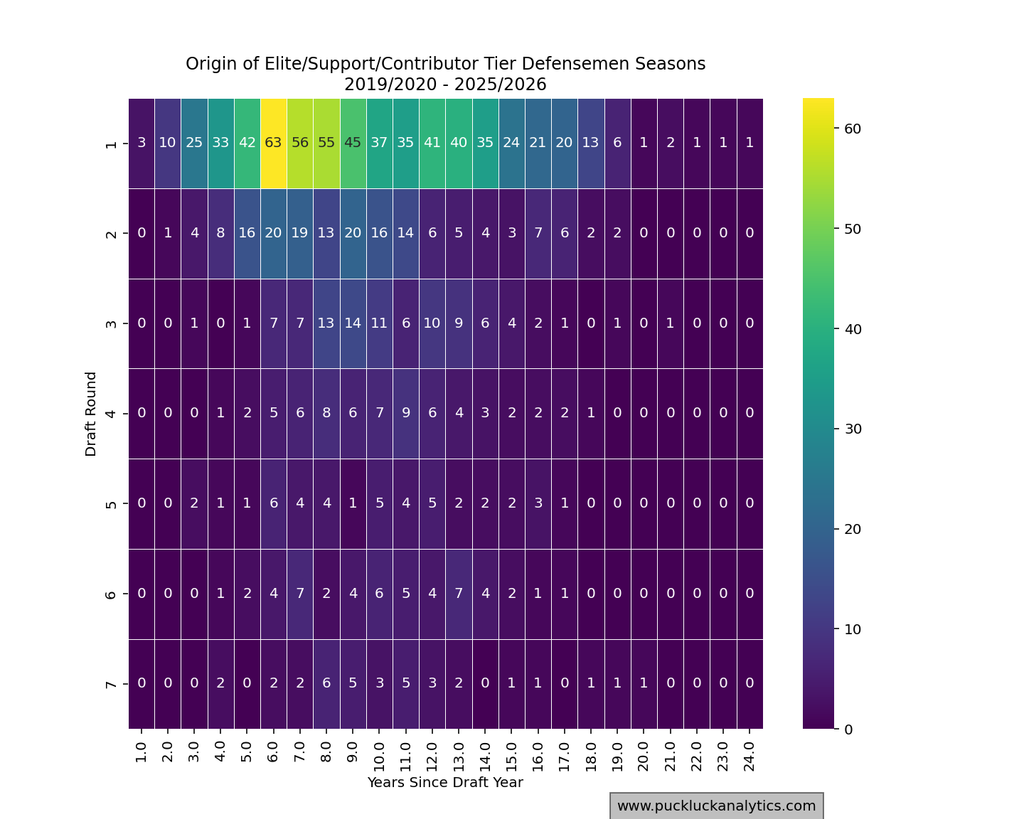
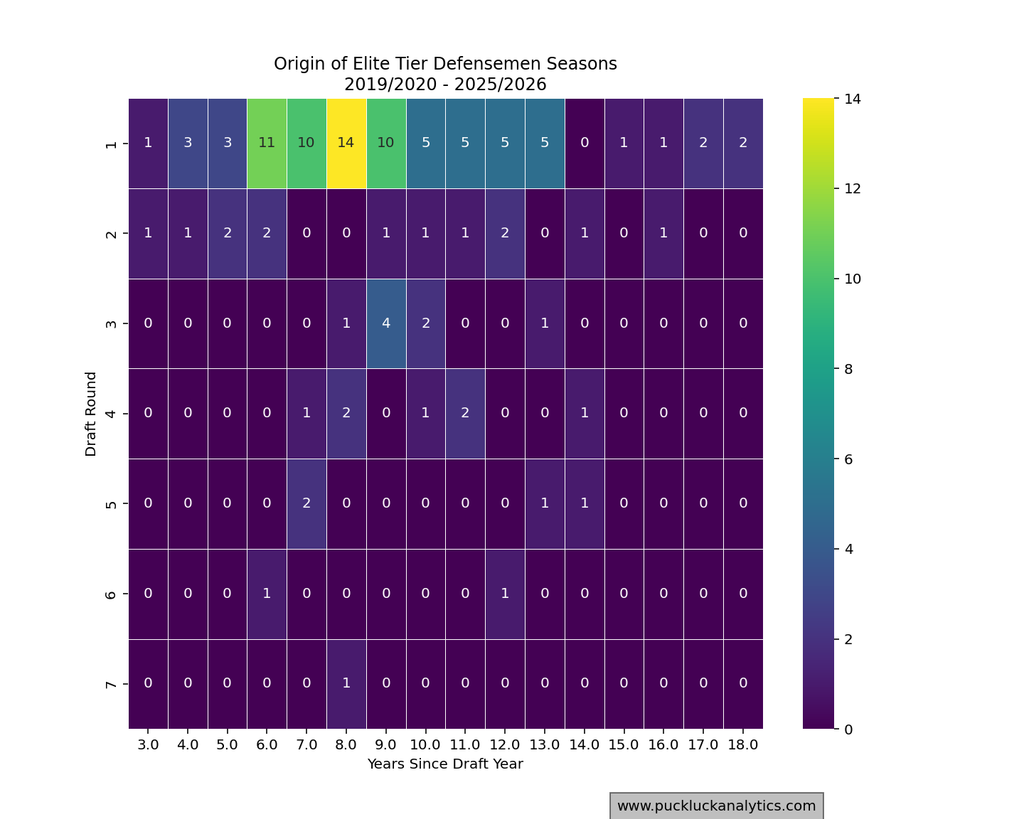
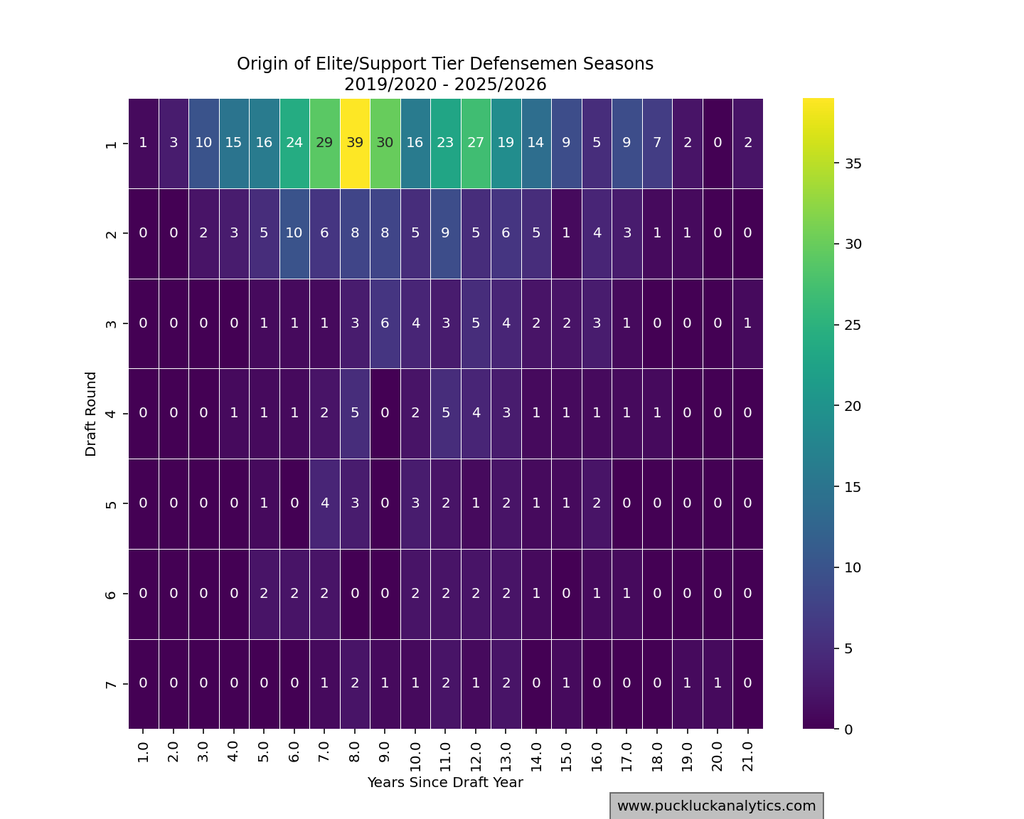
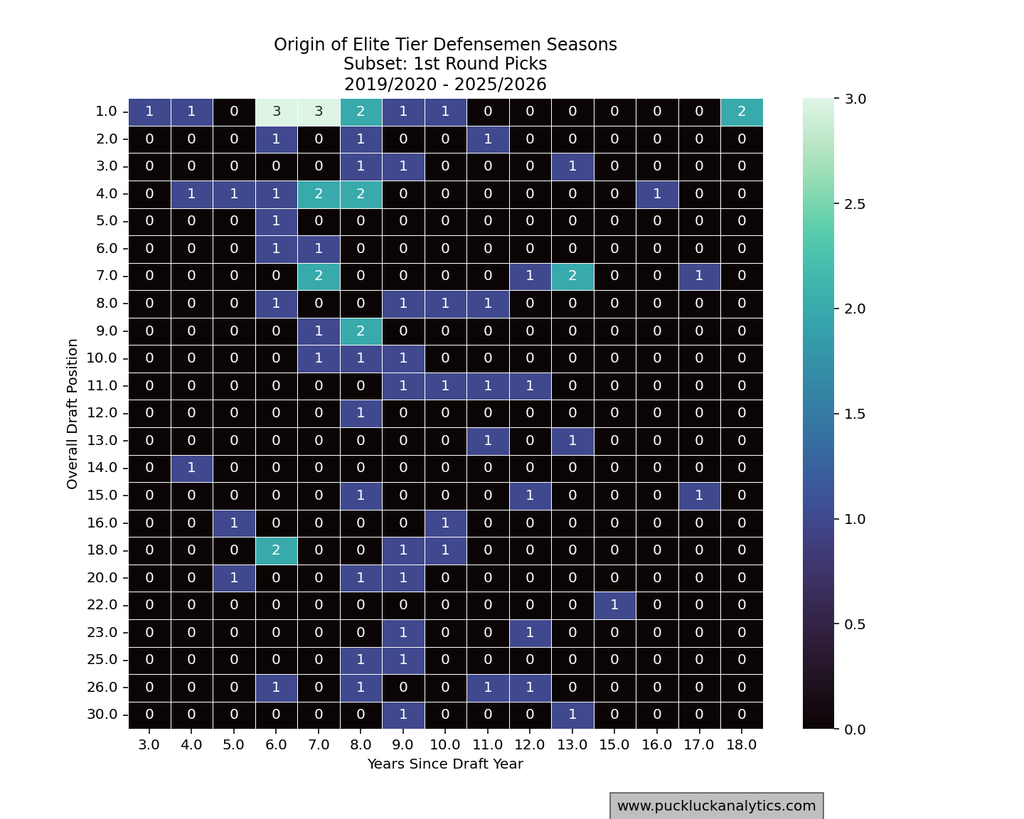
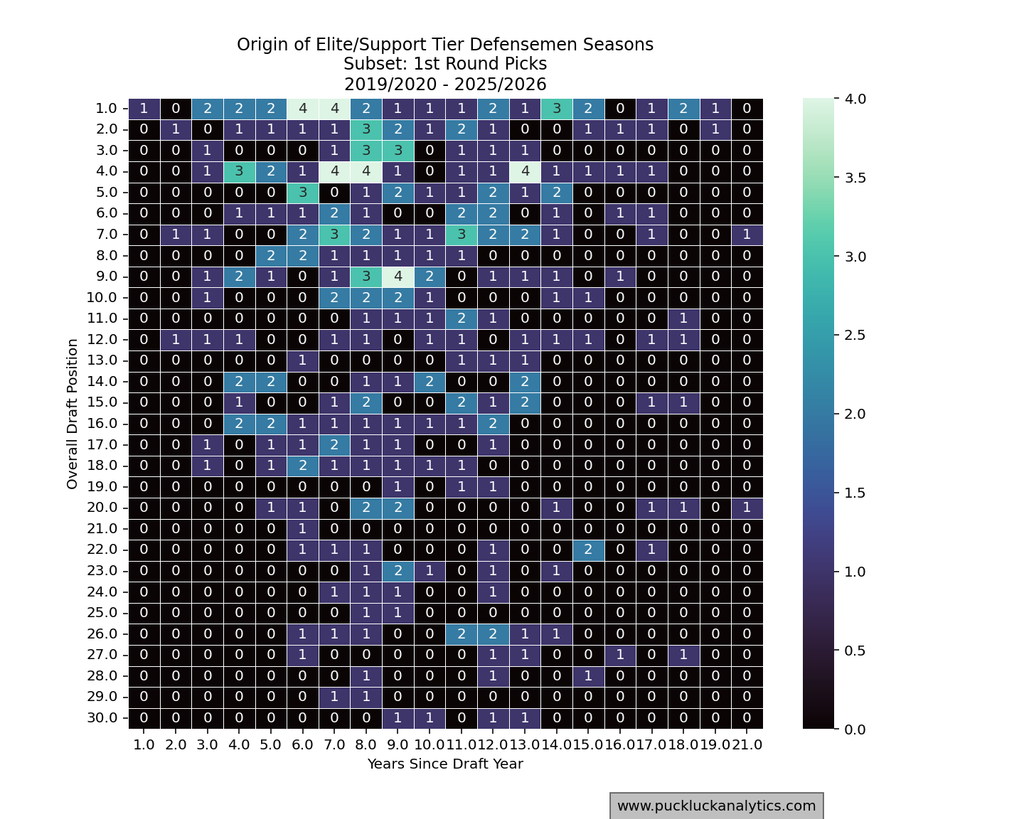
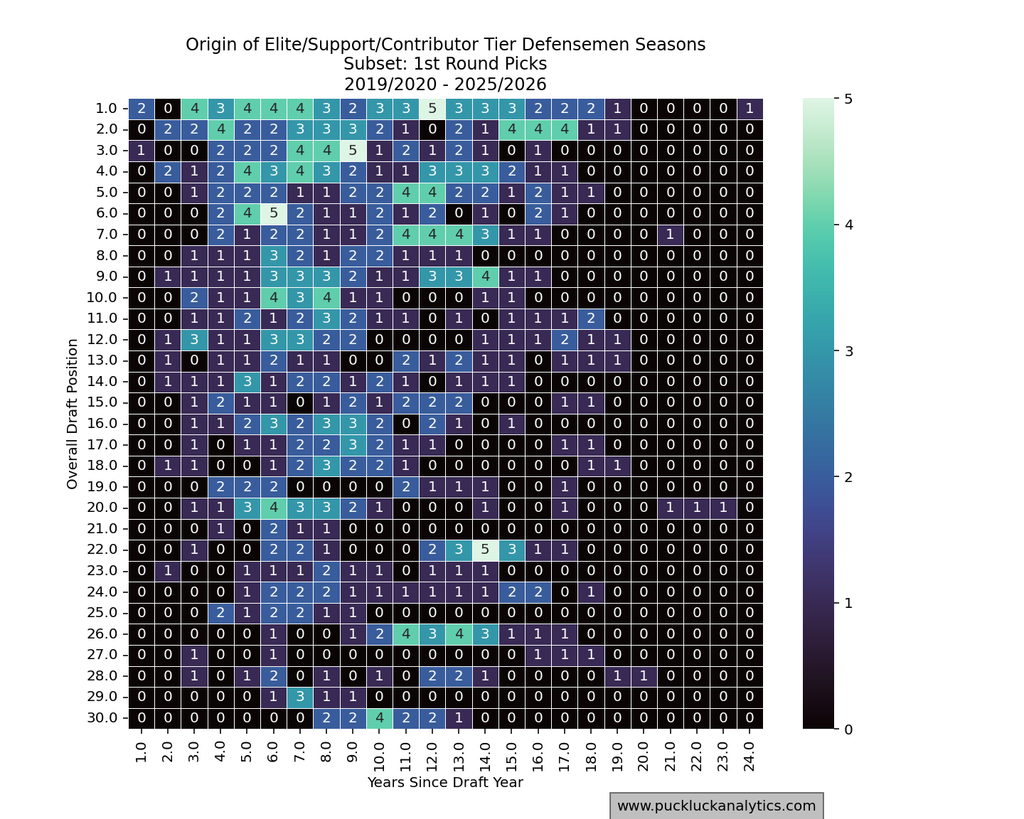
The results are largely similar to the forwards analysis, however there is one interesting difference. The hit rate on defensemen drafted in the first round is distributed deeper into the first round. There is less of an advantage to picking in the top 3 for top end results or the top 10 for contributor tier results. For defensemen, the top 10 appears to be the bar to maximize success potential for eventual Elite and Support tier seasons and the top 20 appears to be a reasonable place to look for Contributor tier defensemen.
Roster Building Implications
In general, these results support the contention timeline and the idea that the best way to assemble a contention cohort is to build through the draft. Perhaps there is potential to shorten the contention timeline by a few years, however certainly not by a large amount. It simply takes time for top level skaters to hit their prime.
The idea that a contention cohort is best supported by a supplementary group younger than the main group is also supported. We’ve seen this in action in past analysis of cup winning rosters and the timeline for top six contributors to develop we see here fits with the idea that they can complement a contention cohort about 5 years post draft.