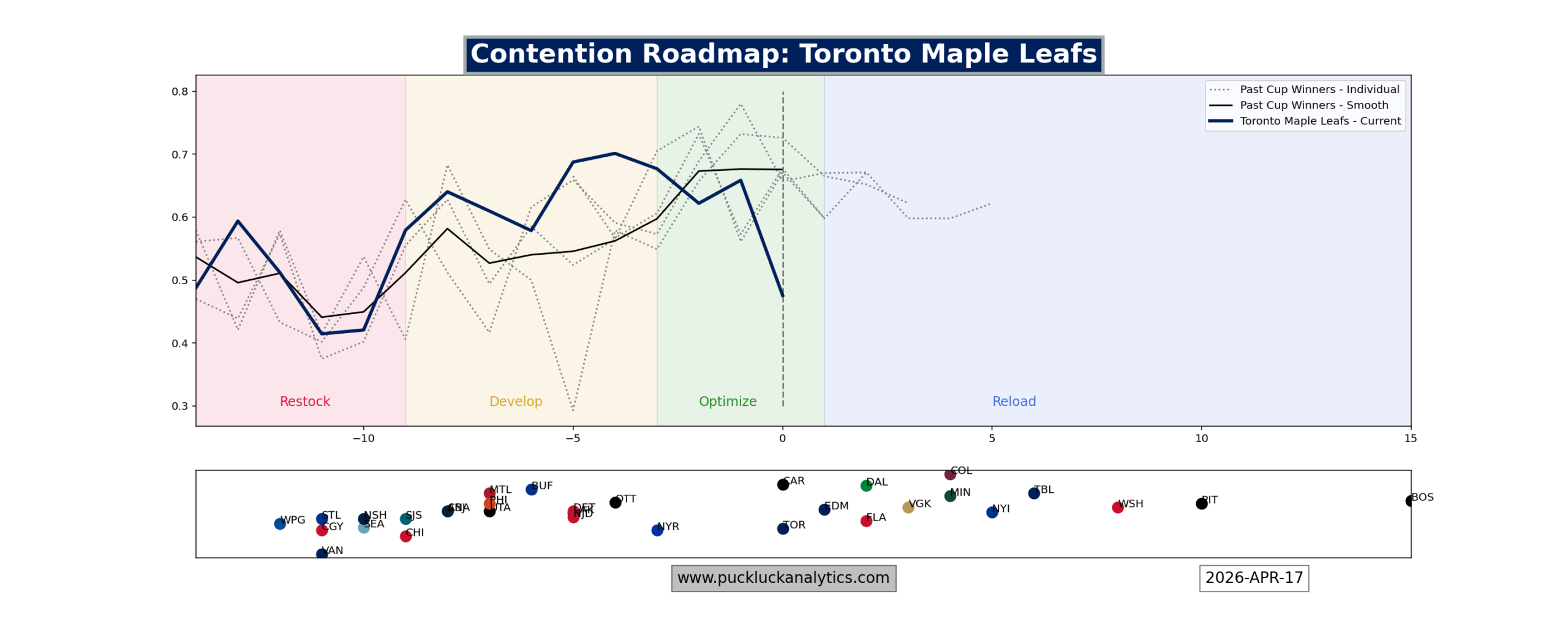
When Brad Treliving took the reigns as Toronto Maple Leafs GM in 2023, he inherited a perennial 100 point team that was ready to compete for a Stanley Cup. They were just entering the Optimize phase of the roster building timeline with the Auston Matthews/Mitch Marner cohort and were primed to be refined into a true contender. Rather than finding their way to the promised land under though, Treliving managed to dismantle the core with stunning efficiency to the tune of a 28th place finish in just his 3rd season at the helm.
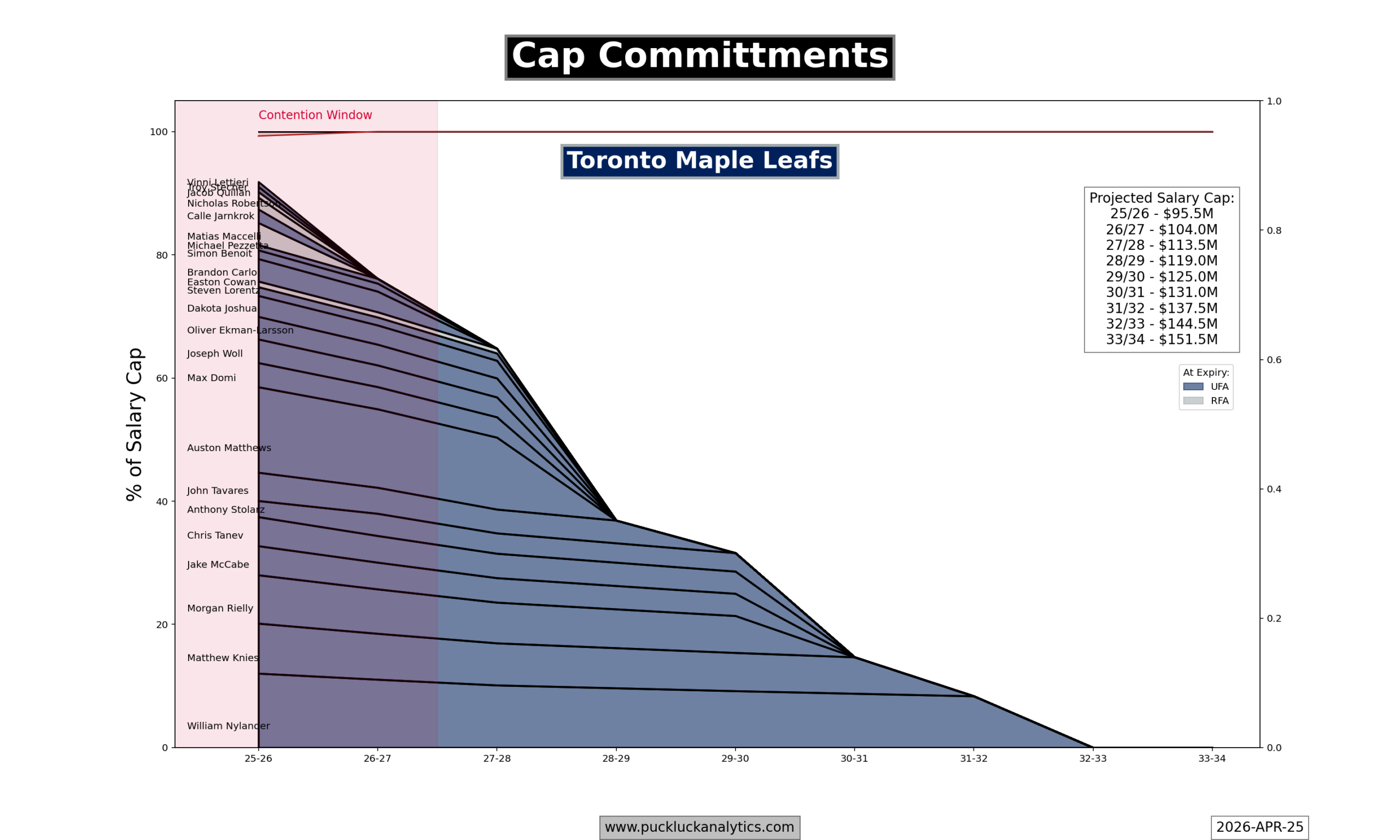
Treliving’s penchant to rack up free agent signings was a contributing factor in forcing decisions like the one that saw Mitch Marner dealt rather than extended with the Leafs. There were plenty of questionably high cap hit deals with medium term signed during Treliving’s tenure. Restricted movement clauses were handed out like candy on Halloween, with 13 players on the roster owning some kind of no trade or no move protection. The result is a cap sheet that will take some work from the new GM to overhaul the roster.
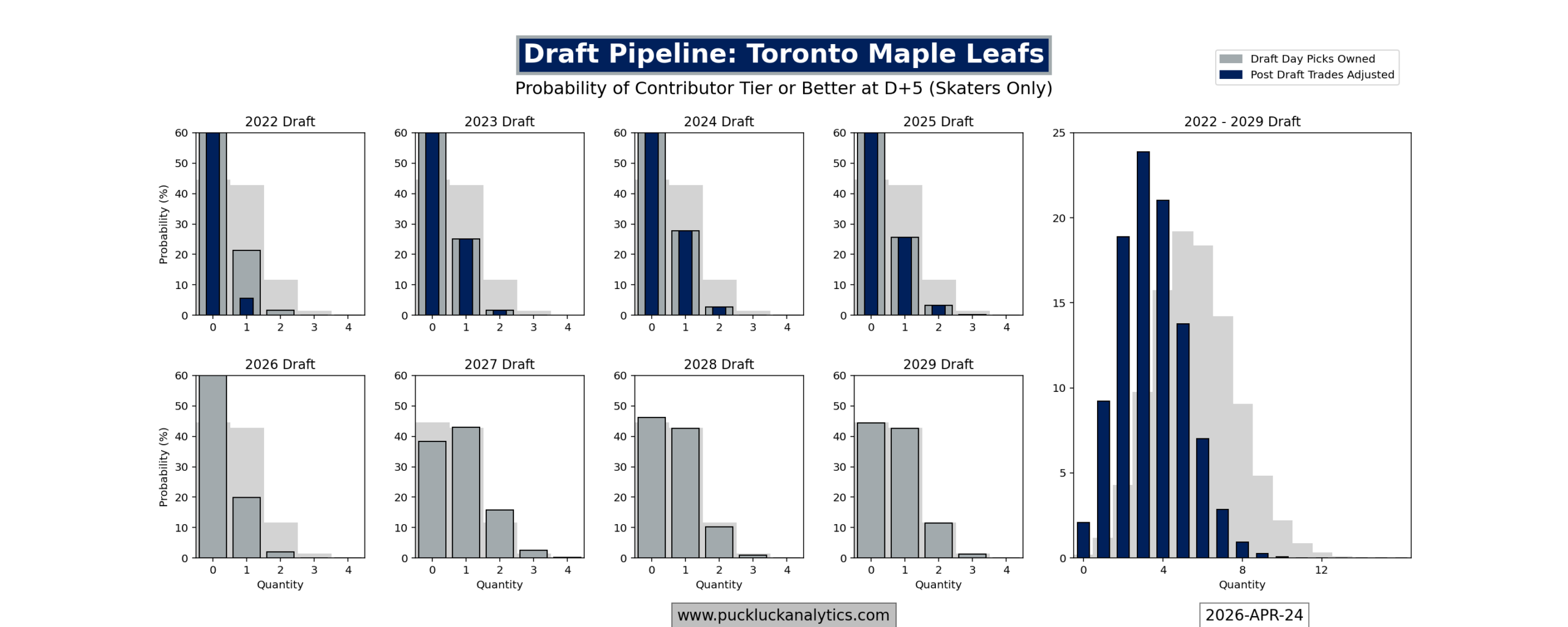
While the Leafs have been burdened with costly UFA signings, they have also not been able to sustain a stream of young talent hitting the NHL roster on cost efficient ELCs. They’ve traded so many picks and prospects in the past few years that the future potential in the organization is well below baseline. The lottery results next week will decide whether the Leafs will keep this year’s pick (in the top 5) or whether it will transfer to Boston as part of the Brandon Carlo acquisition, which may then affect the 2027 1st traded to the Flyers for Scott Laughton. Regardless of the outcome, the Leafs simply don’t have the draft capital to build a strong cohort through the draft in the next few years so short term tanking seems almost out of the question.
If there’s a bright spot in a disastrous season, perhaps it’s that the roster isn’t so far past it’s competitive years that it can’t be molded back into something that can hold legitimate Stanley Cup aspirations. As is, the roster is veteran heavy. Plenty of those vets may still hold good value on the trade market if they’re made available and deals can be made around no movement clauses. Despite the thin prospect pipeline, there is a small group of younger players coming into their prime that look like they can be capable contributors to a contending roster.
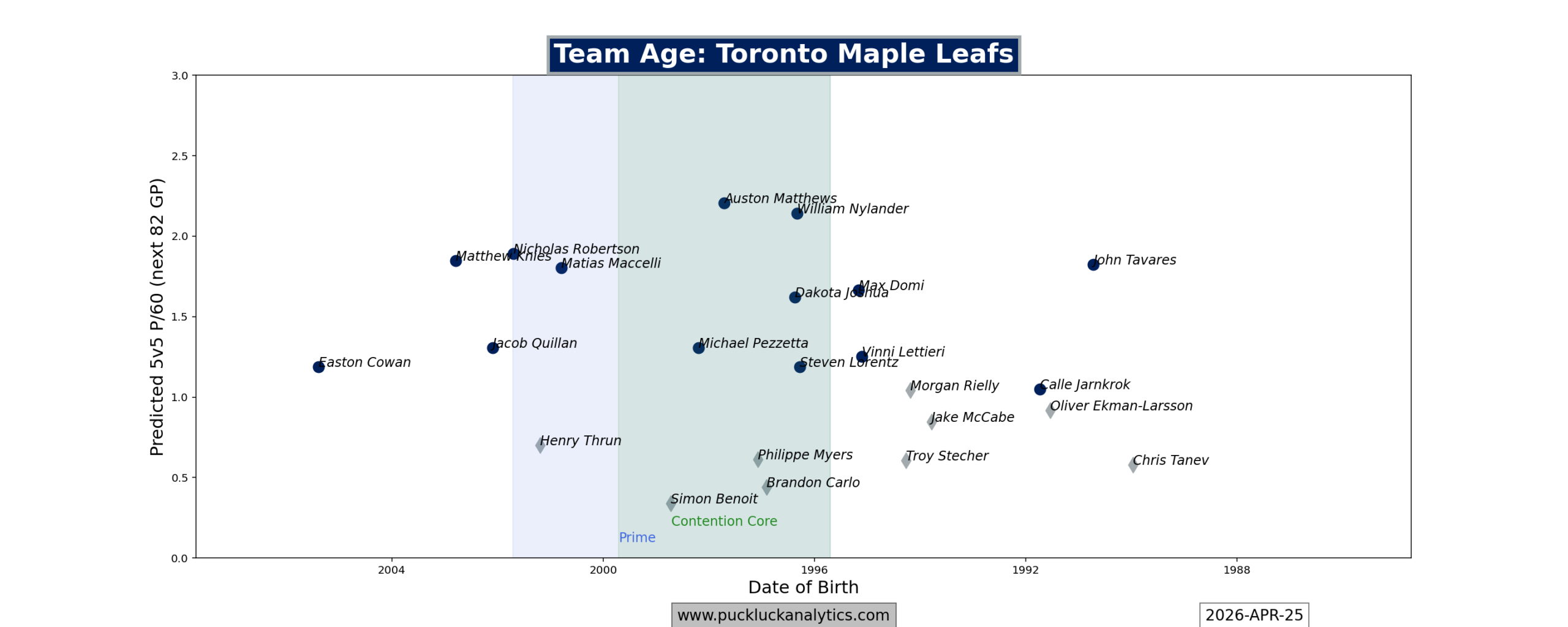
Whoever the new GM is in Toronto, they have a gargantuan task in front of them to reshape this roster. Auston Matthews and William Nylander may still be key cogs in a revamped roster and Nick Robertson, Mattias Maccelli and Matthew Knies have potential to be strong contributors. The rest of the supporting cast and the defense corps need a major overhaul though. They’ll need to navigate the no movement/trade clauses and turnover a significant chunk of the roster to get younger and build a new cohort that can compete through their prime years.